MCP 服务器中的提示让您能够定义预构建的高质量指令,客户端可以使用这些指令,而不必从头编写自己的提示。可以将它们视为精心制作的模板,比用户自己想出的内容能带来更好的结果。
为什么要使用提示?
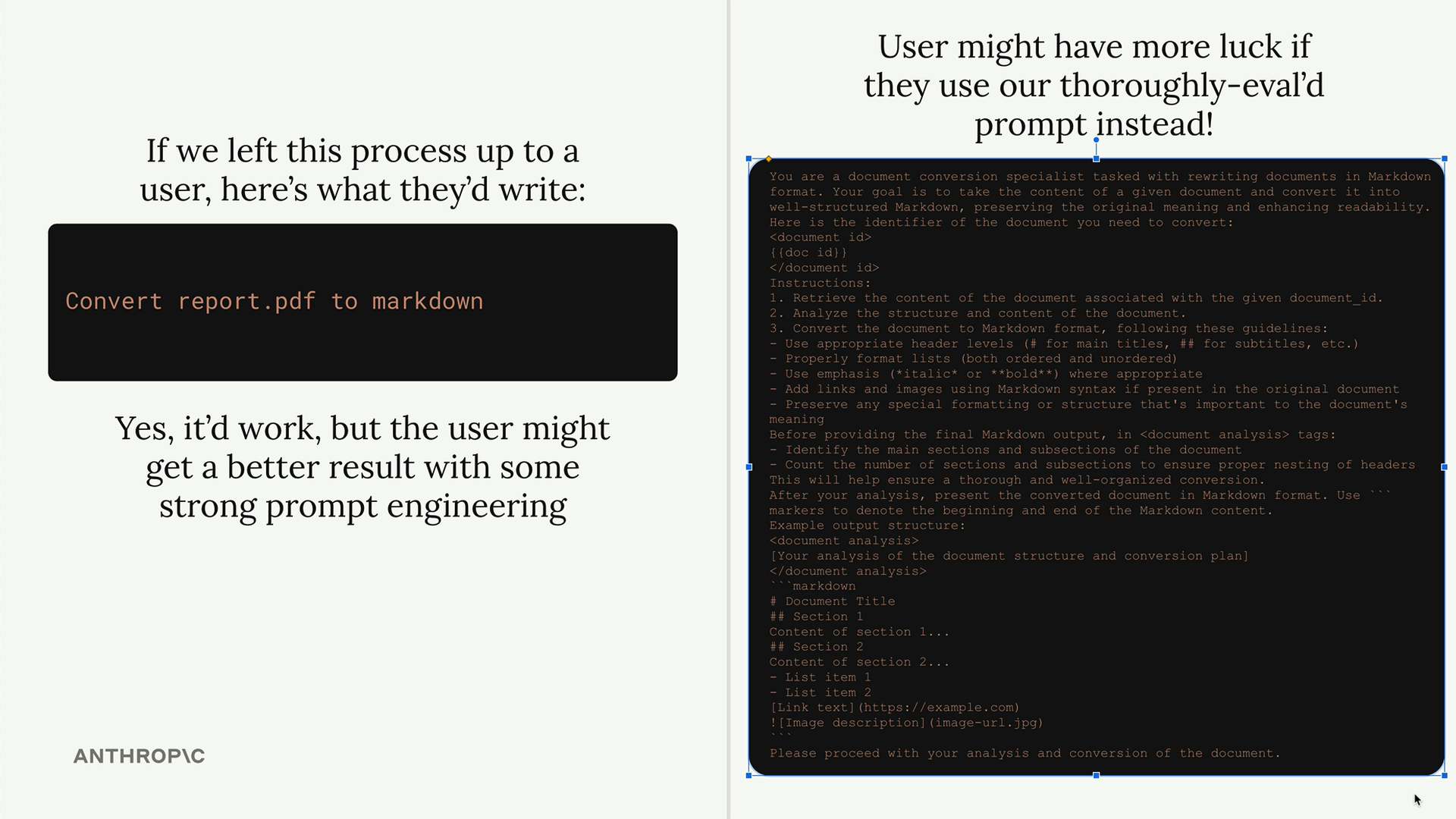
假设您希望 Claude 将文档重新格式化为 markdown。用户可以直接输入"将 report.pdf 转换为 markdown"并获得不错的结果。但如果他们使用了您专门为文档格式化设计的、经过充分测试的专用提示,他们很可能会获得更好的输出。
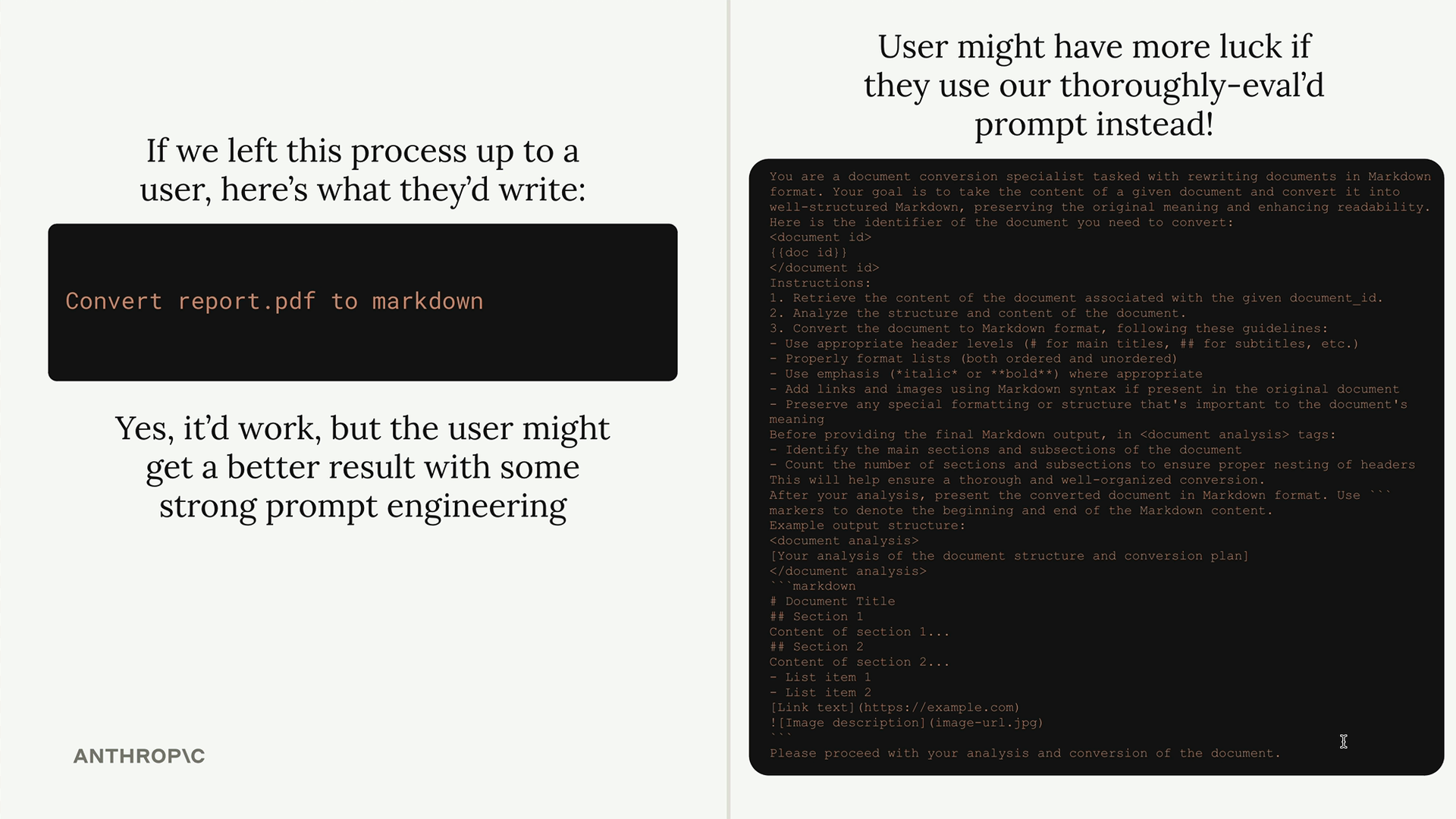
关键的洞察在于:虽然用户可以自己完成这些任务,但当使用由 MCP 服务器作者精心设计和测试过的提示时,他们会获得更优质的结果。
提示的工作原理
提示定义了一组用户和助手消息,客户端可以直接使用这些消息。当客户端请求某个提示时,您的服务器会返回一个消息列表,该列表可以直接发送给 Claude。
基本结构如下所示:
python
@mcp.prompt(
    name="format",
    description="Rewrites the contents of a document in Markdown format",
)
def format_document(
    doc_id: str = Field(description="Id of the document to format"),
) -> list[base.Message]:
    # 返回消息列表
构建格式化命令
这里有一个实际的例子。我们将创建一个格式化命令,让用户可以输入 /format doc_id 来将任何文档重新格式化为 markdown 语法。
该提示的实现包含了给 Claude 的详细指令:
python
def format_document(
    doc_id: str = Field(description="Id of the document to format"),
) -> list[base.Message]:
    prompt = f"""
Your goal is to reformat a document to be written with markdown syntax.

The id of the document you need to reformat is:

{doc_id}


Add in headers, bullet points, tables, etc as necessary. Feel free to add in structure.
Use the 'edit_document' tool to edit the document. After the document has been reformatted...
"""

    return [
        base.UserMessage(prompt)
    ]
测试您的提示
您可以使用 MCP Inspector 来测试提示。导航到 Prompts 标签页,选择您的提示,并提供任何所需的参数。
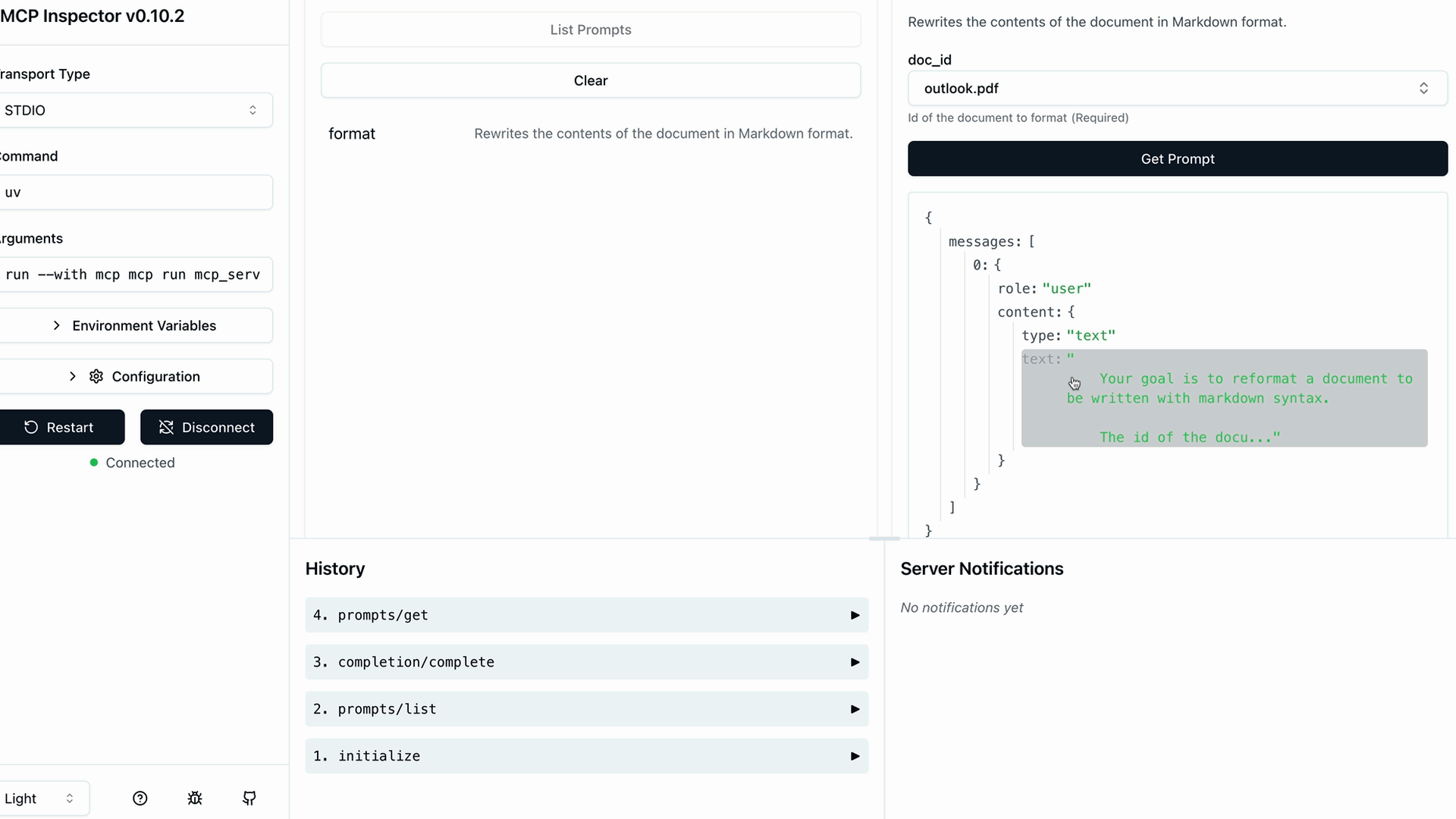
Inspector 会准确显示将发送给 Claude 的消息内容,包括任何参数如何被插入到提示文本中。
主要优势
- 质量控制 - 您可以在用户看到提示之前对其进行测试和优化
- 一致性 - 用户每次都能获得可靠的结果
- 专业化 - 提示可以针对您服务器的特定领域进行定制
- 可复用性 - 多个客户端可以使用同一套精心制作的提示
实现细节
别忘了导入消息类型所需的基础模块:
python
from mcp.server.fastmcp import FastMCP
from mcp.server.fastmcp.prompts import base
提示应该是高质量、经过充分测试的,并且与您的 MCP 服务器的整体用途相关。在我们的文档管理示例中,格式化提示非常合理,因为该服务器专门处理文档操作。